Peptide Recognition With Hplc & Ms High Performance Liquid Chromatography ( HPLC) method advancement, validation, and evaluation is one of one of the most widely used methods for drug testing in formulations and organic liquids. Purity is determined by separating the main top area by the total integrated area of all UV-absorbing heights. Regular setups for standard, assimilation, circulation price, and gradient conditions are critical for similar data. William is a study expert at Peptides Lab UK, specialising in study peptides, lab substances, and sourcing criteria for high-purity peptide products. Peptides are delicate and can conveniently become compromised if you aren't mindful. This is why logical screening during formula growth is so crucial. Learn more here For assay reproducibility, HPLC Approach Growth relies on the appropriate combination of pumps, logical columns and pre-columns, mobile stage, and autosampler problems. HPLC Technique Recognition makes certain proper assay selectivity, level of sensitivity, and reproducibility. We see logical data not as a deliverable to be "provided," however rather as a living artefact that needs to stand the test of time long after the billing has actually been cleared up. Therefore, every solution component, be it a customized pollutant account, a security method, or a regulatory file, is developed for traceability, story-telling, and future-proofing. Crude peptides undergo gel filtration complied with by HPLC filtration. HPLC filtration is done by the state-of-art HPLC system with Empower Chromatography Supervisor. The system is confirmed by authorized Seas recognition specialist to adhere to FDA requirements. The pureness of the peptide is validated by running logical HPLC followed by mass spectrum analysis. Scientists after that determine just how much of the complete signal belongs to the primary height. If 98% of the signal comes from the appropriate peptide, the product is identified "98% pure by HPLC." This is a conventional method of revealing peptide high quality across study and pharmaceutical markets.
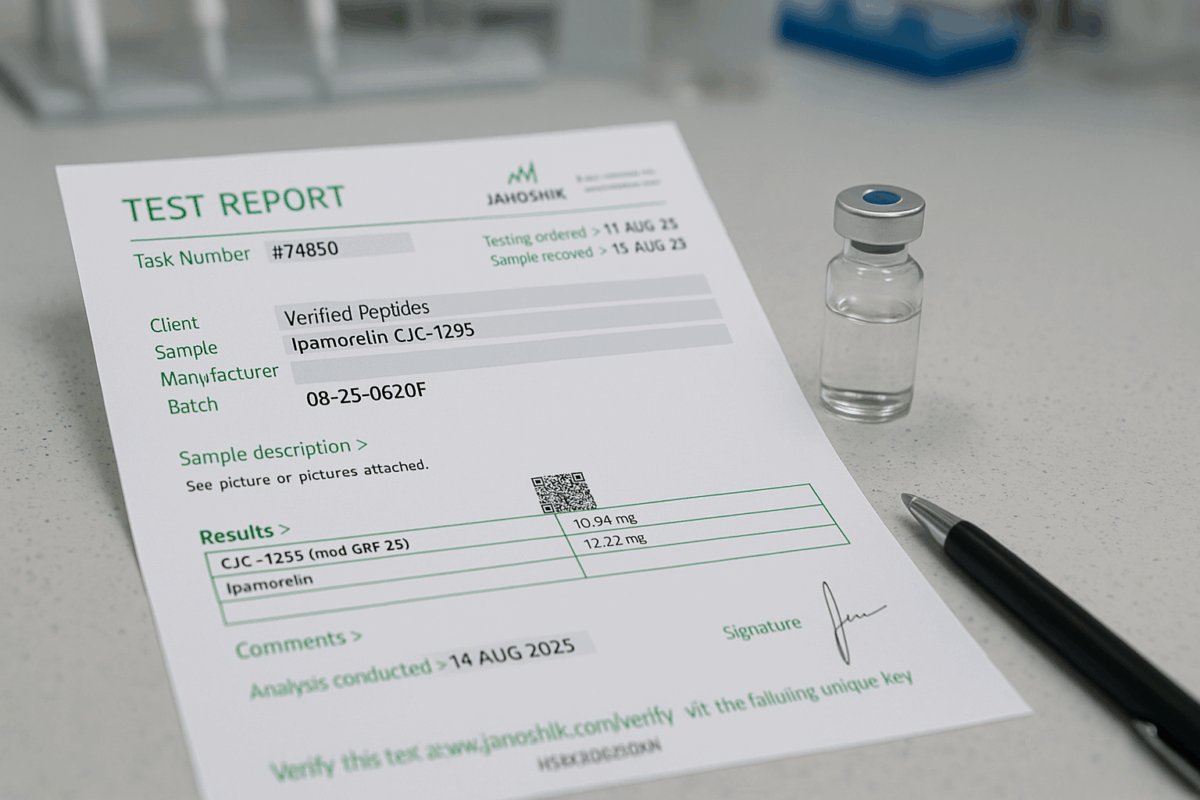
- This short article is provided for educational and research recommendation purposes only.High pressure requires the mobile stage with securely loaded bits inside the column, generating sharper separations and greater resolution than standard low-pressure chromatography.This is why chromatography alone is generally insufficient for regulatory entries.Together, they form the basis of a Certificate of Analysis (COA) -- the certification that comes with genuine research-grade peptides.The annual product testimonial need to demonstrate that the validated technique continues to function as anticipated within its statistical guardrails; inconsistencies require corrective actions that remain in turn investigated.Peptide research is only as strong as the devices behind it-- and that begins with testing.
Logical Technique Transfer
As an experienced CDMO, we provide accessibility to sophisticated logical tools, specialist method development, and support through the governing labyrinth. We specialize in assisting little pharma companies like yours navigate the complexities of peptide solutions with excellent analytical solutions. Keeping that being said, creating peptides can be difficult since they weaken quickly and are unbelievably conscious environmental problems. This is where logical testing for peptide formulas comes to be crucial.What Is A Great Pureness For Peptides?
The target peptide looks like a distinctive optimal, and its area relative to the complete height location suggests the purity percentage. A well-synthesized research peptide generally accomplishes pureness degrees of 98% or greater. Polluted peptides reveal several optimals on HPLC chromatograms, molecular weight disparities in mass spectrometry, or visible particles in service. Independent laboratory screening discovers contamination prior to products reach scientists. Mass spectrometry provides conclusive verification of peptide identification by gauging the specific molecular weight of the substance, typically to within 0.01% of the theoretical worth. NorthEast BioLab constantly surpasses assumptions on bioanalytical assay development, validation, and example analysis. At Pinnacle Peptide Supply, every peptide is verified via HPLC and MS testing, offering scientists self-confidence in their job and reputable outcomes each time. Research-grade peptides must have purity degrees of 98% or higher, with costs suppliers supplying 99.0% to 99.7% pureness. Greater pureness guarantees better study outcomes and minimizes disturbance from pollutants. Yes, research peptides are legal in the UK when offered and acquired strictly for laboratory study purposes. Due to the various polarities of different polypeptides, their elution times on RP-HPLC will certainly likewise be various, so that the splitting up of the polypeptides can be attained. The separated peptides are analyzed through numerous strategies, such as UV detection, diode array discovery, or mass spectrometry, which can be utilized to check the absorbance or mass ranges of the eluted peptide. A pure peptide will certainly show a solitary, sharp peak in the chromatogram, while contaminations or impurities will appear as added optimals or shoulder peaks. Our Qualified Peptide Synthesis https://jasperixzt952.nexorafield.com/posts/search-peptides-and-peptide-accessories-available Laboratory is especially designed and run to permit the custom synthesis of peptides based on specified procedures and under recommended lab conditions. The center is eco managed and utilizes verified instrumentation, consisting of cutting edge HPLC systems interfaced with the Empower Chromatography Supervisor, for peptide purifications and purity analyses.Picked Study Referrals
Just how much time does an HPLC test take?
Time Required for HPLC EDTA Test Records + Following Steps